Sunday, September 23, 2012

Squabbling and Stalemate after big move by ECB

Despite the important moves by the ECB to support Spanish and Italian bonds, Euro area finance ministers continued to squabble over details of a deeper fiscal union and oversight of banks:

"Squabbling among European governments over the next steps needed to overcome the sovereign debt crisis raised the specter of more turmoil, puncturing a rally that had sent Spanish 10-year bond yields to their lowest in five months."
http://www.bloomberg.com/news/2012-09-16/european-squabbling-on-currency-crisis-solution-may-test-rally.html
European Leaders Struggle to Overcome New Crisis Stalemate
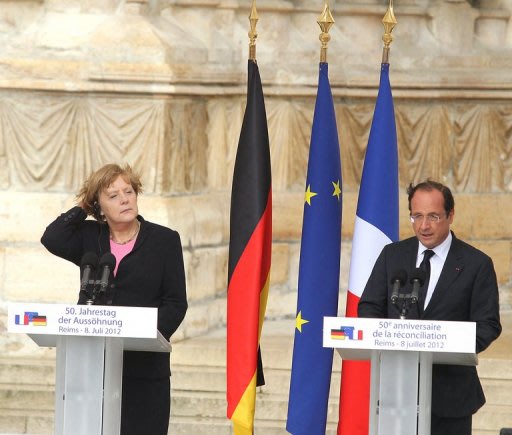
EU leaders continued their one-on-one meetings with Spanish Prime Minister Rajoy meeting with his counterpart Mario Monti in Italy, while Francois Hollande and Angela Merkel met during a commemoration ceremony of a reconciliation speech by General DeGaulle in 1962 in Ludwigsberg Germany.
http://www.bbc.co.uk/news/world-europe-19684532

German Chancellor Angela Merkel and French President Francois Hollande in the yard of the castle in Ludwigsburg.
It's not clear that France and Germany see eye to eye on Euro crisis issues, and agreement is still needed on many details to move forward with the ECB's plans.
http://www.businessweek.com/news/2012-09-23/euro-leaders-seek-end-to-stalemate-as-discord-mounts-on-crisis
But perhaps one of the more disturbing pieces of news out of Europe this weekend was the impact of the Euro crisis on Irish Pubs "Irish bar sales have dropped by about 25% over the past decade — 5% last year alone — and the number of pubs has fallen from more than 10,000 to 8,300. Ten years ago, 80% of alcohol sales occurred in bars; now fewer than half do. The fastest-growing beverage is wine, once ordered in a pub only by the brave or unwitting." Having spent time in Irish pubs 7 (!) years ago, I hope that they will rebound...
http://www.freep.com/usatoday/article/57832862

Sunday, September 16, 2012

An eventful week in Europe

On Wednesday the German Constitutional Court ruled that Germany could take part in the European Stability Mechanism: http://www.cnn.com/2012/09/12/business/german-constitutional-court-esm/index.html?hpt=wo_c2

After the ECB announced last week that it would basically become the "lender of last resort" for Eurozone countries Jose Manuel Barroso pushed for a more federal Europe in his state of the European Union speech:
http://www.presseurop.eu/en/content/press-review/2687731-barroso-utters-dreaded-word

He defended his position in a lively interview with Richard Quest of CNN: http://www.cnn.com/2012/09/13/business/barroso-europe-federal-states/index.html?hpt=ieu_c2

The Dutch election showed that there is still support for the EU and the Euro currency:
http://www.bloomberg.com/news/2012-09-13/dutch-election-suggests-europe-hasn-t-lost-its-mind-just-yet.html

The Economist opines on whether the recent moves by the ECB and Euro Zone countries are enough to end the crisis: http://www.economist.com/node/21562915

Steven Erlanger of the New York Times provides an overview of the weeks events:
http://www.nytimes.com/2012/09/14/world/europe/european-union-celebrates-german-and-dutch-decisions.html?_r=1

Along with the debt crisis, illegal immigration continues to be a challenge for Greece: http://online.wsj.com/article/SB10000872396390444506004577617383132000476.html

Saturday, September 8, 2012

Bold Move by ECB not necessarily a cure for Eurozone Ills


Boris Roessler/European Pressphoto Agency
Mario Draghi, the head of the European Central Bank. Through his efforts to save the currency, Mr. Draghi may now be the most powerful leader in Europe.


As expected, the European Central Bank (ECB) moved to shore up market support and reduce interest rates for bond sales in Italy and Spain: http://www.nytimes.com/2012/09/07/business/global/european-central-bank-leaves-interest-rates-unchanged-at-0-75-percent.html?pagewanted=all

As noted in an editorial it is now up to EU governments to take the appropriate measures to move their economies forward: http://www.nytimes.com/2012/09/07/opinion/the-latest-attempt-to-save-the-euro.html?src=recg

However, the ECB's Draghi's bold move to support shaky countries leads to criticism, as Steven Erlanger from the New York Times writes: http://www.nytimes.com/2012/09/08/world/europe/after-high-note-for-ecb-plan-some-discord-emerges.html?ref=europe

France's president who has only been in office for a few months must figure out a way to cut his deficit while keeping his promises to increase economic growth: http://www.nytimes.com/2012/09/08/world/europe/french-president-must-cut-deficit-but-how.html?ref=europe

"And, in a worrying sign for euro zone policy makers, much of the media and political reaction in Germany — the euro zone’s most important country — was negative" http://www.nytimes.com/2012/09/08/business/global/daily-euro-zone-watch.html?ref=europe

Unemployment is still trending up, with Greece at 24.4% in June and Spain at 25.1%, higher than many more recent members of the EU like Slovakia at 13.3 %, and Poland at 12.3%. (from http://247wallst.com/2012/09/07/nations-with-the-highest-unemployment-rates/2/)

The New York Times website "Tracking Europe's Debt Crisis" has the latest: http://www.nytimes.com/interactive/business/global/european-debt-crisis-tracker.html?ref=global

Also a link to a graphic display for "Understanding the European Crisis Now"

Tuesday, September 4, 2012

High level meetings as tensions increase in Eurozone

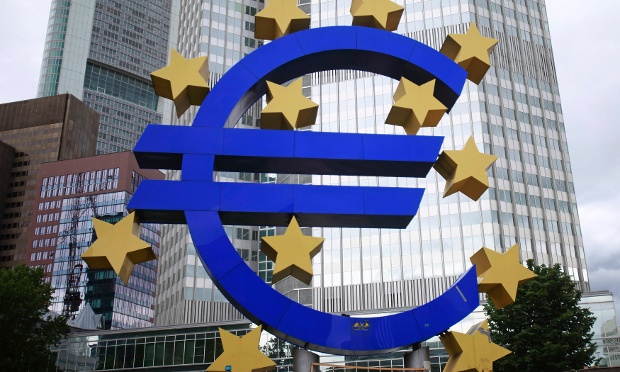
A structure showing the Euro currency sign is seen in front of the European Central Bank (ECB) headquarters in Frankfurt July 11, 2012.

With the beginning of September, the Euro Zone crisis kicks into high gear, with meetings between high level government leaders and the ECB.

From the UK Guardian's Eurozone crisis live: http://www.guardian.co.uk/business/2012/sep/04/eurozone-crisis-moodys-european-union-negative#block-5045fd7ac0e35a003915c3fb

Germany tells Greece to keep reforming

Greek finance minister Yannis Stournaras received an blunt message from the German government today: implement those economic reforms, or else.
It was delivered in Berlin, where Stournaras met German finance minister Wolfgang Schäuble. After the meeting ended up, the finance ministry issued this statement:
  • 'Most important is that Greece fully implement its obligations.Finance minister Schäuble pointed this out to his colleagues once again.'
The ministry added that Germany remains determined to see the details of the Troika report into Greece's economy before taking a decision on the country's request for more time to hit its targets. That report may not be released for several weeks.
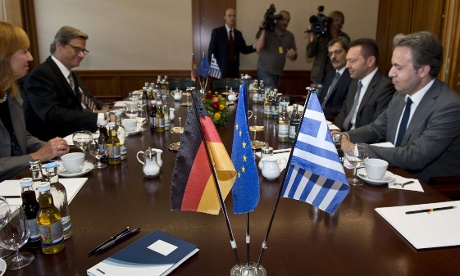
Stournaras also held talks with German foreign minister Guido Westerwelle, so here's a photo:
German Foreign Minister Guido Westerwelle (2nd from L) and Greek Finance Minister Yannis Stournaras (2nd from R) hold talksGuido Westerwelle (second from the left) and Yannis Stournaras (second from the right) holding talks at the the Foreign Ministry today. Photograph: John Macdougall/AFP/Getty ImagesThe Wall Street Journal reports on concerns that tensions may resurface this month, as the ECB work on conditions for bond purchases and several key meetings will be happening:
 
--Tuesday: French President Francois Hollande meets Italian prime minister Mario Monti. Greek Finance Minister Yannis Stournaras meets German finance minister Wolfgang Schaeuble. Greek T-bill auction.
--Wednesday: Euro-zone August services PMI data. German bond auction. Troika of Greece's lenders returns to Athens.
--Thursday: ECB rate decision and press conference. Revised EU second-quarter GDP data. Spanish and French bond auctions. German July manufacturing orders. German Chancellor Angela Merkel meets Spanish prime minister Mariano Rajoy.
--Friday: German July industrial production.

Wednesday, August 22, 2012

Pressure builds in Europe

August is usually a quiet time in Europe as most Europeans go on vacation, including leaders like France's new president, Francois Hollande. However, vacation time is over, and Hollande is facing some major issues, including the crisis in Syria, the announcement of major layoffs at Peugot, and riots in the city of Amiens, as I discussed on the BBC last week:


Hollande was criticized for going on vacation during a time of crisis in France and across Europe, but he is jumping right back into the fray, with a meeting with German Chancellor Angela Merkel on Thursday http://www.reuters.com/article/2012/08/20/us-france-hollande-challenges-idUSBRE87J0IV20120820
There are expectations for the pair to drive decisive action to remedy the  crisis, despite their differences
Although expectations are low for the meeting, it comes as data on the European economy come out, which are expected to show that the European economy is stalled, or even shrinking.  This data will impact European Central Bank deliberations as noted in the Wall Street Journal "The European Central Bank meets in a little over two weeks, and the surveys are among the last top-tier data officials will have in hand as they weigh interest-rate cuts and new steps to stabilize Spanish and Italian bond markets."

Angela Merkel is also facing major pressures at home and related to the Euro crisis. She has faced the greatest pressures, due to Germany's key role in managing the crisis, but she has also faced an unraveling coalition at home as noted in another article from the Wall Street Journal "German Chancellor Angela Merkel faces one of the toughest choices of her career in the coming weeks: whether to risk the unraveling of the euro zone, or her government."

Another top issue is Greece - the next few weeks may decide whether or not Greece will remain in the Eurozone.  Hollande and Merkel will each have meetings with the Greek Prime Minister this week, as Greece struggles to meet it's debt reduction commitments and Samaras tries to convince his European partners that they should continue to provide bail-out funds:
http://ca.news.yahoo.com/greeces-euro-fate-hangs-over-merkel-hollande-meet-032859601.html

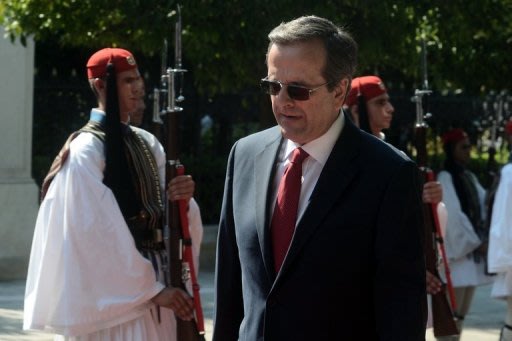
Samaras will reportedly try to persuade his European partners to extend a deadline for spending cuts

Tuesday, August 7, 2012

What's going on in Europe? (besides the Euro crisis)

Denmark elected a left government last Fall, a historic election for the new woman prime minister (article).  However, as Denmark completed its 6 month Presidency of the European Council,  things were not looking as good for Thorning-Schmidt, as her far left coalition partner was angered over a deal on taxes with the center right (Economist). Another Danish politician, Pia Kjaersgaard, today decided to step down as leader of the Danish People's party, which has declined in influence since the election. The anti-immigration party had a strong influence over Danish governments beginning with the 2001 election, supporting the minority right-wing government, but the right suffered defeat with the fiscal crisis, despite the fact that Denmark is not part of the Euro zone.

On the immigration front, this has been a difficult time for immigrants in Greece. Armed gangs have been patrolling parts of Athens where immigrants live, often assaulting people. The government is detaining and preparing to deport large numbers of illegal immigrants, as Syrian refugees stream into Turkey and then try to make their way across the Greek-Turkish border. Greece is sending more border patrol agents, trying to stem the flow (Greece to deport 1600 in immigration crackdown).

In Sweden, a gathering by far-right anti-Islam groups from the U.S. and Europe was considered a flop, with estimates of only 100 to 200 in attendance (article).

Finally, the Olympics in London can only be described as a big success, despite the concerns in advance, and the empty seats the first few days.  There has been drama, heroism, and amazing performances.  It's just what the world needs in a time of great economic and political uncertainty.

Monday, August 6, 2012

Euro Crisis grinds along

Three years ago I started off my class on Western European Politics saying that the Euro crisis was going to be like watching a slow-motion train wreck. Three years later, those words still hold true.  I took a couple of months off from blogging as I was working on some book projects, and I have to say that trying to follow developments in Europe is often a bit tedious, although necessary, as it's not clear when some critical event is going to tip the balance and lead to some major cascade into disaster.  In any case, I need to get back into the swing of things before the semester starts in a few weeks so here are some of the latest headlines:

Don't let the Eurozone Debate Turn Nasty

In Euro Crisis, Every Player Has His Own Agenda

Euro Falls as Italy's Monti Warns of Euro

More to come!